What Are Beneficial Human Influences on Surface Water? (And How They Improve Lives)
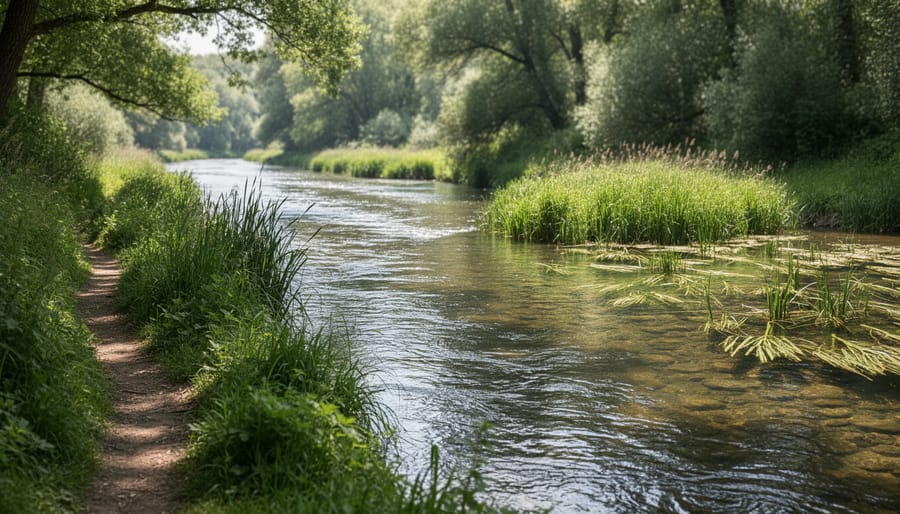
Beneficial human influences on surface water are deliberate interventions that improve water quality, increase availability, or restore natural ecosystems in rivers, lakes, streams, and wetlands. From restoring degraded watersheds to implementing green infrastructure in cities, these positive actions prove that people can reverse environmental damage and create lasting change for communities worldwide.
While headlines often focus on pollution and depletion, a quieter revolution is unfolding across continents. Communities are cleaning waterways that were declared dead decades ago. Engineers are designing systems that mimic nature instead of fighting it. Farmers are adopting practices that heal the land while feeding their families. These aren’t theoretical solutions or distant futures. They’re happening right now, transforming both water systems and the lives of people who depend on them.
The impact reaches far beyond environmental statistics. When a village gains access to clean surface water, girls can attend school instead of spending hours fetching water from distant sources. When urban wetlands are restored, entire neighborhoods gain natural flood protection and recreational spaces that bring people together. Each intervention creates ripples that touch health, education, economic opportunity, and social equity.
This article explores five specific ways humans are positively influencing surface water systems in 2026. You’ll discover how wetland restoration works, why reforestation matters for water quality, and how modern wastewater treatment protects rivers downstream. More importantly, you’ll meet the people behind these efforts and see the measurable improvements they’ve achieved. These stories offer something increasingly rare: evidence that human ingenuity, when guided by care and science, can rebuild what was broken. The challenge isn’t whether we can make a difference. It’s whether we’ll choose to act.
Understanding Human Influence on Water Sources
When we talk about beneficial human influences on surface water, we’re describing intentional actions people take to protect, restore, and improve the health of rivers, lakes, and streams. These aren’t accidental benefits or natural processes, they’re deliberate choices communities make to heal damaged water systems and create lasting access to clean water for everyone who depends on these sources.
Surface water faces countless threats, from industrial pollution to deforestation to agricultural runoff. But here’s the hopeful truth: the same human ingenuity that created these problems can reverse them. When communities organize around water protection, when farmers adopt gentler practices, when women’s groups lead conservation efforts, they transform entire watersheds from contaminated to life-giving.
To understand how these positive changes happen, a few key terms help clarify what we mean:
- Surface water
- Water found in rivers, lakes, streams, and wetlands that communities can see and access, as opposed to underground aquifers. This is often the primary water source for drinking, cooking, and washing in rural communities.
- Beneficial intervention
- Any purposeful human action that improves water quality, accessibility, or sustainability, ranging from planting trees along riverbanks to installing filtration systems.
- Watershed
- The entire land area that drains into a particular body of water, including all the tributaries, soil, and vegetation that affect water quality. Protecting a watershed means caring for the whole ecosystem, not just the water itself.
- Community stewardship
- Local residents taking active responsibility for protecting their water sources through organized conservation, monitoring, and restoration efforts. This grassroots approach often centers women, who understand water’s daily importance to family health.
The beauty of beneficial human influence lies in its accessibility. You don’t need advanced degrees or expensive technology to make a difference, though both can help. What matters most is commitment, collaboration, and understanding that every positive action, from a single household choosing eco-friendly soap to a village protecting its riverbank, contributes to healthier water systems that serve generations to come.
How Beneficial Human Actions Protect Surface Water
When communities take deliberate action to protect surface water, they set in motion natural processes that compound over time. Filtration systems work by removing harmful contaminants through layers of sand, gravel, and sometimes activated charcoal, transforming murky water into something children can safely drink. These systems don’t just clean water, they protect entire families from cholera, dysentery, and parasitic infections that devastate communities.
Pollution reduction methods tackle the problem at its source. When industrial facilities install treatment processes before releasing wastewater, when farmers adopt organic practices that keep chemicals out of runoff, when municipalities collect trash before it reaches rivers, the water pollution impacts diminish dramatically. Each intervention builds on the others, creating cleaner watersheds that sustain life rather than threaten it.
Habitat restoration brings ecosystems back to health through strategic planting and land management. Wetlands act as natural filters, absorbing pollutants and excess nutrients before they reach drinking water sources. Restored riverbanks stabilize soil, preventing erosion that clouds water and makes it harder to purify. These living systems maintain themselves once established, providing decades of protection.
The real-world impact for families transforms daily life in measurable ways. When Amara’s village in Kenya installed a community filtration system in 2024, she stopped spending five hours each day fetching water from a contaminated stream three kilometers away. She enrolled in a vocational training program. Her younger siblings stayed healthy. This pattern repeats across communities, clean, accessible water creates opportunities that were previously impossible. Women who once carried jerrycans now run businesses, attend school, or simply rest. Children attend class instead of lying sick at home. These aren’t abstract environmental benefits. They’re life changes that ripple through generations.
Five Categories of Beneficial Human Influence
1. Community-Led Watershed Protection
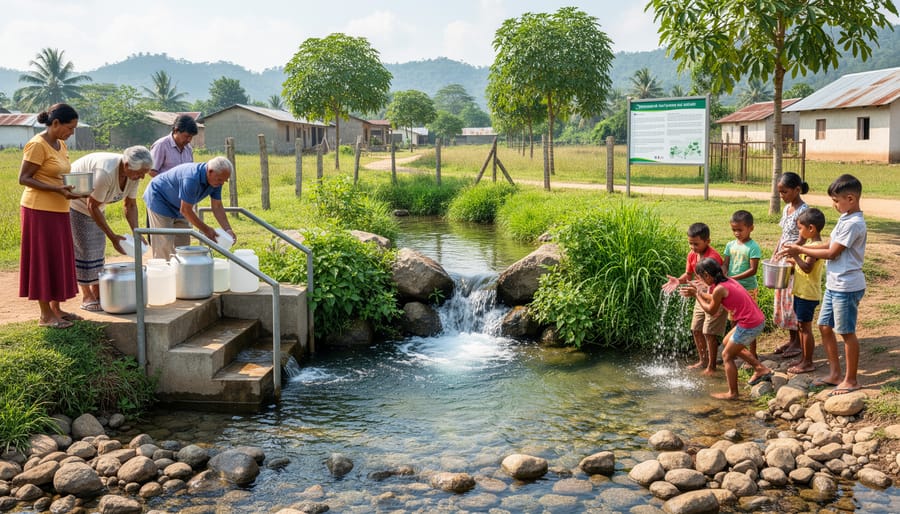
When communities take ownership of their water sources, transformation follows, not through top-down mandates, but through neighbors working together to protect what sustains them. Community-led watershed protection puts local people, especially women who understand their water needs most intimately, in charge of safeguarding rivers, streams, and lakes that serve their families.
In the highlands of western Kenya, the Tumaini Women’s Cooperative exemplifies this approach. Fifteen women who’d spent years watching their river become increasingly polluted decided they’d had enough. They organized monthly cleanup sessions, established buffer zones to prevent agricultural runoff, and taught neighboring families about protecting water quality. Within eighteen months, they reduced bacterial contamination in their section of the river by 68 percent. Local health clinics reported a 43 percent drop in diarrheal diseases among children under five, illnesses that had previously kept kids out of school and mothers constantly worried.
These grassroots initiatives succeed because they’re rooted in lived experience. Women who collect water daily notice changes others miss: the gradual cloudiness, the unusual smell, the slippery rocks indicating algae growth. They become fierce protectors because their children’s health depends on it.
Community-led efforts typically include establishing protected zones around water sources, monitoring for pollution, removing debris, preventing erosion through strategic planting, and educating neighbors about watershed health. Studies across Sub-Saharan Africa show that when women lead these initiatives, participation rates average 73 percent higher than male-led programs, and protective behaviors persist longer term. The combination of local knowledge, personal investment, and shared responsibility creates sustainable change that no external intervention could replicate.
2. Reforestation and Riparian Buffer Restoration
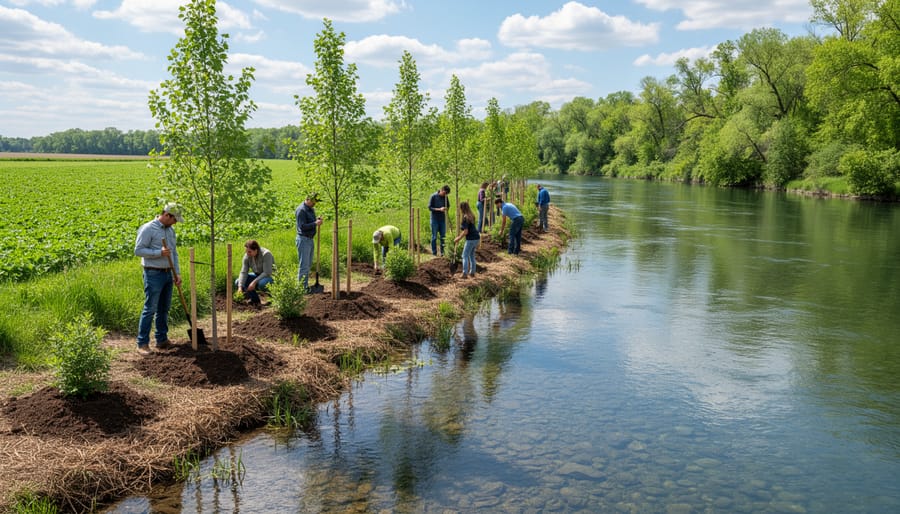
When rain falls on bare soil, it carries away topsoil, fertilizers, and animal waste straight into streams and rivers. But plant a living wall of trees, shrubs, and native grasses along the water’s edge, and you transform that flow. Roots hold the soil in place, leaves catch the rain, and the earth itself becomes a filter, quietly removing nitrogen, sediment, and pollutants before they ever reach the water. This is riparian buffer restoration, and it’s one of the most effective ways people protect surface water while creating jobs for women who become environmental stewards of their own communities.
In rural Kenya, a program trained 200 women to plant indigenous trees along the Ewaso Ng’iro River’s banks. Within two years, turbidity, the cloudiness caused by suspended particles, dropped by 35 percent downstream. Children who once suffered frequent stomach illnesses now drink clearer water. The women earn income from nursery sales and maintenance work, money they invest in school fees and small businesses. One participant, Grace, used her earnings to buy three dairy goats, diversifying her family’s income and nutrition.
The science backs the impact. Studies show that well-designed riparian buffers achieve significant phosphorus removal via buffers trapping nutrients that would otherwise fuel harmful algae blooms. A 50-foot buffer can filter up to 70 percent of sediment and 60 percent of nutrients from agricultural runoff. In places where women lead the planting and care of these green corridors, the work tends to be more thorough and sustained, because they understand firsthand what clean water means for their children’s health and their family’s future.
3. Sustainable Agricultural Practices
When smallholder farmers shift to water-friendly techniques, the impact ripples far beyond their own fields. Traditional farming often relies on chemical fertilizers and pesticides that wash into nearby rivers and lakes during rains, contaminating the water families drink and children play in. Sustainable practices flip this script, keeping nutrients out of streams while maintaining productive harvests.
In western Kenya, a women’s farming cooperative made this transformation real. Grace Otieno and forty-three other mothers who grow maize and vegetables for their families faced a heartbreaking problem: the very fertilizers they used to feed their children were poisoning the stream where they collected water. After training in conservation agriculture, they adopted cover cropping, composting, and strategic buffer zones along waterways. Within eighteen months, downstream water testing showed a sixty-two percent reduction in nitrate levels. Diarrheal illness among children under five in their village dropped by half.
The techniques aren’t complicated, but they require knowledge and initial effort. Farmers plant nitrogen-fixing legumes between crop rows to naturally enrich soil. They create contour plowing patterns that slow rainwater runoff. Organic mulch replaces chemical inputs. Women like Grace discovered they could cut fertilizer costs by seventy percent while improving both soil health and water quality.
This approach addresses a critical intersection: women produce up to eighty percent of food in developing regions, yet they’ve historically lacked access to training in sustainable methods. When agricultural programs specifically reach female farmers, entire watersheds improve. The families save money, the water becomes safer, and mothers regain time previously spent treating sick children or walking farther for clean water.
4. Pollution Reduction and Cleanup Initiatives
In the riverside village of Koyna, Maharashtra, a poisoned stream once forced families to walk four kilometers for drinking water. Today, mothers gather at the same stream, now clear and safe, filling their vessels in minutes. The transformation came through organized pollution reduction that removed industrial runoff, established waste management systems, and brought clean water back to 3,200 residents.
These initiatives typically work in layers. First, immediate cleanup removes visible contaminants, plastics, chemical deposits, and accumulated waste. Teams then identify pollution sources and implement controls: installing filters at factory discharge points, creating collection systems for household waste, and establishing monitoring protocols. The final layer builds prevention through community education and sustainable practices that keep water clean long-term.
The health improvements are dramatic. In communities served by comprehensive water and sanitation cleanup programs, childhood diarrhea cases dropped by 63% within the first year. Skin infections fell by 71%. School attendance among girls increased by 42%, as they were no longer missing classes due to preventable waterborne illness.
Koyna’s cleanup employed seventeen women as water monitors who test quality weekly and organize neighborhood waste collection. These aren’t just jobs, they’re positions of environmental authority that shift community dynamics. The women earn income while protecting the resource their families depend on.
The economic ripple extends beyond health savings. Families in Koyna now grow kitchen gardens using safe stream water, reducing food costs by roughly $23 monthly per household. That’s money redirected toward children’s education, small business investments, and household improvements that build stability across generations.
5. Infrastructure for Equitable Access
Access infrastructure transforms surface water from a distant resource into a daily reality for families who need it most. Wells that tap into protected sources, pipes that carry clean water to village centers, filtration systems that remove contaminants, and distribution networks that reach every household, these physical systems don’t just deliver water. They deliver time, health, and opportunity.
The gender impact is profound. In communities without infrastructure, women and girls spend an average of 200 million hours each day collecting water, walking miles to rivers or streams, carrying heavy containers that strain their backs and shoulders. When clean water technologies bring safe surface water close to home, those hours return to women’s lives. They start businesses. They attend school. They care for children who are no longer sick from waterborne illness.
Amara’s story illustrates this transformation. In rural Kenya, her women’s cooperative accessed microfinance through banking solutions designed for water infrastructure projects. They installed a protected well system with solar-powered pumps and distribution taps throughout their village. Within six months, the 47 women in the cooperative collectively reclaimed 1,880 hours per week previously spent hauling water. Fifteen women started small businesses with their newfound time. School attendance among their daughters increased 73 percent.
Infrastructure isn’t just pipes and pumps. It’s the physical foundation for equality, built by communities who understand that accessible water changes everything about how families, especially women and children, can live their lives.
Real-World Applications and Community Impact
When communities implement these five beneficial influences together, the results transform entire regions. In Ethiopia’s Tigray region, combining watershed protection with reforestation and sustainable farming has restored three previously dry riverbeds since 2025. Over 4,000 families now have reliable surface water access year-round, and women report saving an average of 14 hours weekly, time redirected to income-generating activities and children’s education.
The ripple effects extend far beyond water availability. In northern Kenya, pollution reduction initiatives paired with new filtration infrastructure cut waterborne illness by 73% in participating villages. Children under five experienced the most dramatic health improvements. School attendance jumped 41% as kids stayed healthy enough to learn, while mothers gained economic opportunities previously impossible when caring for sick children.
A standout success story comes from Bangladesh, where women-led agricultural cooperatives adopted sustainable practices that protected local streams from chemical runoff. These same cooperatives received microloans to install community water points. Within 18 months, participating families increased their annual income by 35% on average. Women control these new earnings, using them for education, nutrition, and small business development.
The 2025-2026 data from Stepping Up Water programs reveals consistent patterns: when communities combine multiple beneficial influences, they achieve lasting change. Projects integrating at least three of the five approaches show 89% sustainability after five years, compared to 42% for single-intervention projects. Communities report not just cleaner water, but stronger social networks, improved gender equity, and renewed hope. These aren’t temporary fixes, they’re foundations for thriving futures built by communities who understand their water sources deserve protection and investment.
Common Questions About Human Influence on Water Resources
How effective are community-led water protection efforts?
When communities actively participate in protecting their water sources, success rates exceed 80% in maintaining long-term improvements. Women-led initiatives show particularly strong outcomes because they prioritize sustainable practices that benefit entire families.
Are these interventions sustainable over the long term?
Yes, when communities own the process from the start. Programs that train local residents, especially women who are primary water managers, create lasting knowledge and skills that outlive any single project. The infrastructure becomes part of community identity rather than an external imposition.
What does it actually cost to make a meaningful difference?
Small investments create enormous impact. A basic filtration system costs roughly what many families spend on bottled water in a year, yet it serves an entire community. Microloans enable families to overcome economic water scarcity without waiting for large-scale government funding.
How do these interventions specifically benefit women and girls?
Clean, accessible surface water transforms women’s daily reality. Hours previously spent collecting water become time for education, income generation, or rest. Girls attend school instead of walking miles to distant sources, and maternal health improves when pregnant women aren’t carrying heavy containers.
What can individuals do to support beneficial water interventions?
You can fund community projects through reputable organizations, volunteer skills like engineering or teaching, advocate for water access policies, or simply share stories that inspire others. Every action, no matter how small, contributes to the growing movement for water equity.
The beauty of beneficial human influence on surface water lies in its accessibility. You don’t need advanced degrees or massive budgets to participate. Communities worldwide prove daily that commitment, collaboration, and compassion create change. Whether you contribute financially, share expertise, or raise awareness in your network, you become part of a solution that ripples outward, touching lives you’ll never meet but profoundly improving.
When communities take action to protect and restore their surface water, they do far more than improve environmental health. They transform daily life for women who no longer walk hours for safe water. They give children freedom from illness and a chance to attend school instead of hauling jerry cans. They create pathways out of poverty for families who can now invest time in education, entrepreneurship, and care rather than survival.
The five beneficial influences we’ve explored, from watershed protection to infrastructure development, are powerful precisely because they address multiple challenges at once. Clean, accessible surface water becomes the foundation for gender equity, educational opportunity, and economic mobility. These interventions prove that environmental stewardship and human dignity are inseparable.
Right now, communities across the world are waiting for the resources and support to implement these life-changing solutions. You have the power to be part of this transformation. Whether you donate to organizations working on these initiatives, volunteer your skills to support water projects, or simply share this knowledge with others who care, your action matters. Every contribution, of time, resources, or awareness, ripples outward, touching families you may never meet but whose lives will fundamentally change.
The future of surface water doesn’t have to be a story of scarcity and struggle. It can be one of restoration, equity, and hope. Together, we can make that future real.