Water and Sanitation Interventions That Transform Communities Forever
Water and sanitation interventions are systematic efforts to provide communities with clean drinking water, safe toilets, and hygiene education. These interventions transform lives by preventing waterborne diseases, reducing child mortality by up to 50%, and restoring dignity to families who previously lacked basic facilities.
Every day, roughly 700 million people worldwide still lack access to clean water sources within a 30-minute walk from their homes. Another 2 billion don’t have access to safe sanitation facilities. These aren’t just statistics. Behind each number is a mother who rises before dawn to fetch water instead of sending her daughter to school. A father who watches his child suffer from preventable diarrhea. A grandmother who faces the indignity and danger of practicing open defecation.
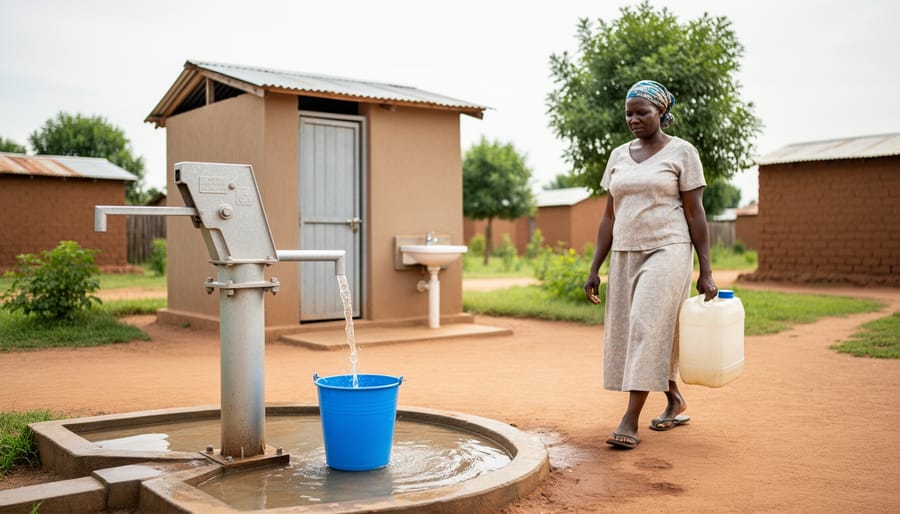
Water and sanitation interventions address these challenges through proven strategies: drilling wells and installing hand pumps in remote villages, building household and community latrines, establishing water treatment systems, and training local health workers to teach proper handwashing techniques. The most effective programs combine infrastructure with education, ensuring communities understand how to maintain new facilities and adopt hygiene practices that prevent disease.
Consider what happens when a village receives its first clean water source. Girls who once spent hours fetching contaminated water can attend school. Families save money previously spent treating waterborne illnesses. Local economies grow as healthier adults can work consistently. Recent data shows that every dollar invested in water and sanitation generates an average economic return of four dollars through improved health, productivity, and time savings.
The interventions that create these changes vary based on local geography, culture, and resources. Understanding which approaches work best, and why, helps donors, volunteers, and organizations maximize their impact in the global effort to ensure everyone has access to these fundamental human needs.
Understanding Water and Sanitation Interventions
Water and sanitation interventions are systematic actions designed to provide communities with safe water access, proper sanitation facilities, and hygiene knowledge that prevent disease and restore dignity. These interventions range from drilling wells and building toilets to teaching handwashing practices and establishing water treatment systems. Each intervention addresses a specific need, yet all share the same goal: creating sustainable solutions that communities can maintain and build upon long after implementation.
The scope of these interventions extends far beyond simply installing infrastructure. A comprehensive approach recognizes that a new well means nothing if the community lacks the knowledge to maintain it, and a latrine serves little purpose if families don’t understand why using it protects their children’s health. That’s why the most effective interventions combine multiple elements, addressing both physical infrastructure and the behavioral changes that make improvements last.
- Water Access Infrastructure
- Projects that provide reliable clean water sources through wells, boreholes, piped systems, rainwater harvesting, or spring protection. These systems bring water closer to homes, eliminating dangerous journeys and contaminated sources.
- Sanitation Facilities
- Construction of latrines, toilets, and waste management systems that safely separate human waste from living spaces and water sources. Proper sanitation prevents disease transmission and provides privacy and dignity.
- Hygiene Promotion Programs
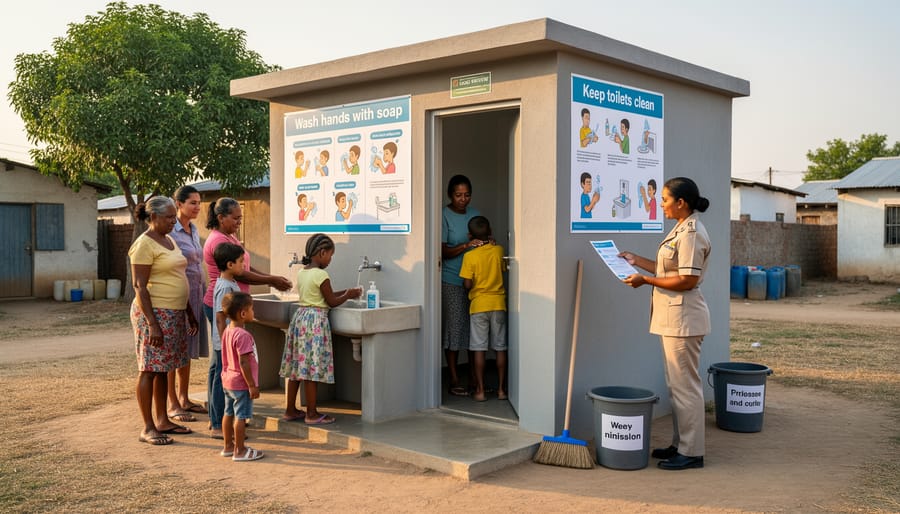
- Educational initiatives that teach critical behaviors like handwashing with soap, safe food handling, and menstrual hygiene management. These programs transform knowledge into daily practices that prevent illness.
- Water Quality Treatment
- Systems and methods that remove contaminants from water, including filtration, chlorination, and point-of-use purification technologies. Treatment ensures that accessible water is also safe to drink.
Different communities require different intervention approaches. An urban slum might need improved sanitation facilities and waste removal systems, while a rural village may prioritize a protected well and hygiene education. Coastal areas benefit from rainwater harvesting during monsoon seasons, and regions with existing but unreliable infrastructure might focus on rehabilitation and maintenance training. The key is tailoring solutions to local contexts, resources, and the specific challenges families face.
When these interventions work together as part of a coordinated strategy, they create lasting change. Infrastructure provides the foundation, education ensures proper use and maintenance, and ongoing support helps communities adapt and improve their systems over time.

The Power of Financial Support Mechanisms
Breaking the Cost Barrier
For millions of families worldwide, the cost of a toilet or clean water connection remains insurmountable. A basic latrine can cost $150 to $300, representing months or even years of savings for households living on less than $2 per day. This economic barrier keeps 2.2 billion people without safe drinking water and 3.6 billion without adequate sanitation, perpetuating cycles of illness and poverty that span generations.
Financial solutions designed specifically for water and sanitation interventions are dismantling this barrier with remarkable results. Through small loans averaging $200 to $500, families can afford toilets, water connections, and hygiene improvements that once seemed impossible. These banking solutions feature flexible repayment terms aligned with household cash flows, typically ranging from six months to two years, making monthly payments as low as $10 to $15.
The impact speaks volumes: organizations implementing these financial models report 99% repayment rates and reach families earning as little as $1.25 per day. In Cambodia, loan programs enabled 2.7 million people to gain toilet access within five years. Across East Africa, similar initiatives helped over 600,000 households install latrines and water systems. When the cost barrier falls, families invest in their health and dignity with remarkable consistency, proving that affordability, not willingness, was always the real obstacle.
Making Dignity Affordable
For a woman named Fatima in rural Kenya, the $150 loan that connected her home to a community water point changed everything. Before, she spent four hours each day walking to collect water, time stolen from her children and any chance of income. The physical toll was relentless, chronic back pain, exhaustion, constant worry about her daughters’ safety on the long walk. Within weeks of accessing clean water at home, Fatima started a small tailoring business during those reclaimed hours. Her daughters, no longer needed for water collection, attended school full-time.
Small loans make dignity affordable. Data from water intervention programs shows that 87% of women beneficiaries redirect their time toward income generation or education within three months of improved water access. These aren’t just infrastructure improvements, they’re investments in human potential. A mother in Uganda uses her newfound time to tend a vegetable garden, feeding her family and selling surplus at market. A grandmother in India no longer risks falls carrying heavy water containers, maintaining her health and independence.
The ripple extends to children’s health. Households with loan-funded sanitation facilities report 44% fewer episodes of diarrheal disease among children under five. Reduced illness means reduced medical expenses, creating financial breathing room for families already stretched thin. This is how breaking water poverty works, by making the cost of dignity manageable through accessible financing, families unlock futures they couldn’t previously imagine.
Community-Level Sanitation Support Systems
Sustainable water and sanitation interventions require far more than physical infrastructure and initial funding. The difference between a project that fails within months and one that transforms a community for generations lies in the comprehensive support systems built around it.
Education forms the foundation of lasting change. When communities understand the clean water impacts on their children’s health and futures, they become invested stewards of new systems. Training programs teach families about hygiene practices, proper sanitation use, and the crucial connection between clean water access and disease prevention. In rural Uganda, health educators work alongside newly installed water points, demonstrating handwashing techniques and explaining why latrines must be maintained. Within six months, waterborne illness rates typically drop by 60 percent in communities that receive this education alongside infrastructure.
Maintenance training ensures communities can sustain their systems independently. Local residents, often women, learn to perform routine maintenance, identify problems early, and conduct minor repairs. This technical knowledge prevents the tragedy of broken pumps abandoned because no one knew how to fix them. One trained technician can serve multiple villages, creating employment while building community resilience.
Effective support systems integrate several critical components working together:
- Community-led monitoring committees that oversee system operation and maintenance
- Local partnerships with health centers, schools, and faith-based organizations
- Peer-to-peer learning networks where communities share solutions and innovations
- Regular follow-up visits from support organizations during the critical first two years
- Accessible spare parts supply chains through local vendors or cooperatives
Community ownership models prove most successful when residents participate in planning and decision-making from day one. In Tanzania, villages that contributed labor during construction and formed water committees before systems went live showed 94 percent functionality rates after five years, compared to 61 percent for externally imposed projects.
These layered support systems create a safety net that catches problems before they become failures. They transform beneficiaries into leaders and ensure that today’s intervention becomes tomorrow’s community asset, maintained and valued by the people whose lives it changed.
Interventions That Create Ripple Effects
Children’s Health and Educational Opportunities
When families gain access to clean water and sanitation, the transformation in children’s health becomes immediate and dramatic. Research confirms that WASH reduces childhood mortality by preventing diseases like cholera, typhoid, and persistent diarrhea that claim hundreds of thousands of young lives each year. Without proper sanitation infrastructure, communities face constant threats from water pollution that spreads pathogens through contaminated sources.
Eight-year-old Amara from rural Kenya used to miss three days of school each week, weakened by recurrent stomach illnesses from drinking contaminated water. Her mother walked four hours daily to fetch water from a distant stream. After her community received a protected well and handwashing stations through water and sanitation interventions, Amara’s health rebounded within months. She now attends school consistently, her energy restored and her dreams of becoming a teacher suddenly within reach. Her younger siblings no longer suffer the dehydration and malnutrition that once stunted their growth.
The connection between water access and education runs deeper than health alone. Children, especially girls, who previously spent hours fetching water can now focus on homework and classroom learning instead of survival tasks.
Empowering Women and Families
Before water arrived in her village, Amina spent four hours each day walking to the nearest water source. She carried 40 pounds on her back while her children waited at home, too young to attend school without supervision. Her dreams of starting a small sewing business remained just that, dreams deferred by the relentless demands of water collection.
When safe water came within walking distance through a community well intervention, everything changed. Those four hours became available for income generation. Within six months, Amina had trained in tailoring and begun earning money from her home. Her daughters now attend school regularly, their attendance jumping from 60% to 95%.
This transformation repeats across thousands of families. Women who once spent 25-40% of their waking hours on water collection redirect that time toward education, entrepreneurship, and childcare. The economic impact is substantial: studies show household income can increase by up to 30% when women gain time for productive activities.
The dignity factor matters equally. Women no longer face harassment or assault during predawn water trips. They maintain menstrual hygiene with privacy and clean facilities, keeping girls in school during their periods. Access to proper sanitation means women can manage their health needs with self-respect rather than shame.
Water access doesn’t just improve women’s lives, it fundamentally restructures opportunity for entire families, creating pathways out of poverty that benefit every generation.
Innovative Approaches for 2026 and Beyond
The water and sanitation sector is experiencing a remarkable shift toward interventions that address not only immediate needs but also long-term sustainability and climate resilience. These innovative approaches recognize why clean water access must be paired with systems designed to withstand environmental challenges while empowering communities to lead their own transformation.
Smart water technology is revolutionizing how communities monitor and manage their resources. Solar-powered water systems with mobile monitoring capabilities allow families in remote areas to track water quality and system performance in real time, reducing maintenance costs by up to 40 percent while ensuring consistent access. These systems integrate renewable energy with efficient distribution networks, making them both environmentally sustainable and economically viable for communities previously dependent on diesel-powered pumps.
Climate-resilient infrastructure represents another leap forward in intervention design. New rainwater harvesting systems incorporate drought-buffer storage and filtration that adapts to changing precipitation patterns, ensuring year-round water availability even as weather becomes less predictable. Sanitation facilities built with flood-resistant materials and elevated designs protect communities in areas increasingly vulnerable to extreme weather events, turning what was once emergency infrastructure into permanent, dependable solutions.
Community-led total sanitation approaches have gained tremendous momentum by shifting the focus from external provision to local ownership and behavior change. These programs train community members as sanitation entrepreneurs who install and maintain facilities while educating neighbors about hygiene practices. In villages across Asia and Africa, this model has achieved open-defecation-free status in half the time of traditional top-down interventions, with 85 percent of facilities still functioning five years later because communities built and own them.
The integration of microfinance with these technological advances creates a powerful combination. Families can now access affordable loans specifically designed for climate-smart water systems or sanitation upgrades, with repayment terms that account for seasonal income variations. This financial innovation, paired with cutting-edge technical solutions, ensures that the most vulnerable communities can adopt the most advanced interventions available, bridging the gap between what’s possible and what’s accessible.
When water and sanitation interventions reach communities paired with financial support mechanisms and comprehensive training, they don’t just solve immediate problems. They rewrite futures. A mother no longer walks three hours for contaminated water. A daughter attends school instead of collecting water. A family breaks free from the cycle of illness and poverty that has trapped generations.
The interventions we’ve explored throughout this article represent more than infrastructure and loans. They embody hope, dignity, and the fundamental belief that every person deserves access to clean water and safe sanitation. From affordable financing that makes toilets possible to community support systems that ensure sustainability, these solutions work because they address both the practical and human dimensions of the crisis.
Right now, 2.2 billion people still lack safely managed drinking water. But this number is changing, family by family, community by community. You can be part of this transformation.
Consider supporting organizations that provide water and sanitation interventions through microloans and community education. Volunteer your expertise to help implement sustainable systems. Share stories that inspire others to act. Every contribution, whether financial or through awareness, extends the reach of these life-changing interventions.
The vision is clear and achievable: a world where no child dies from preventable waterborne disease, where no woman sacrifices her safety or dreams to fetch water, where every family has the dignity of a clean toilet. Water and sanitation interventions make this future possible. Together, we can make it real.